Proper organization of cooperation between lawyers and experts, guarantees of maintaining legal confidentiality when ordering research, as well as regulating the status of expert opinions remain among the key issues of interest to the professional community today.
They were discussed by the participants of the round table “Standards of Professional Conduct of Lawyers and Court Experts: Problematic Issues and Ways to Resolve Them”, organized by the Ministry of Justice, the Institute of Forensic Expertise named after Honorable Prof. M. S. Bokarius and the National Bar Association of Ukraine.
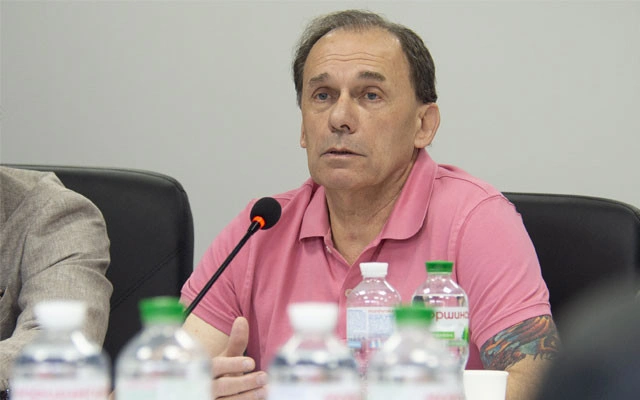
Ihor Fomin, a member of the NAAU Committee on Human Rights Protection, focused on these practical problems that lawyers face daily in their interaction with experts. In particular, he emphasized that an expert is not an “oracle” who can give an answer without proper preparation. In order for a lawyer to apply for a high-quality expert examination, he must provide the expert with a sufficient amount of materials so that he can understand the context of the case and help formulate the questions correctly. Often, after a preliminary analysis, the expert directly recommends refusing to conduct an expert examination if it does not have procedural expediency or will not give the expected result. For a lawyer and his client, such advice is important - it saves time, allows you to avoid mistakes and unnecessary expenses.
However, at the same time, such a consultation takes up the time and resources of the expert institution. Therefore, according to I. Fomin, such preliminary assistance from an expert should be paid. He admitted that this may be an unpopular idea, but considers payment for consultations to be a fundamentally fair condition of interaction between a lawyer and an expert.
The next key problem concerns the preservation of attorney-client privilege during communication with experts. A lawyer transfers a significant amount of information to an expert as part of preparing an examination or receiving a consultation. And later, the prosecution turns to the same expert in the same criminal proceedings. And such a practice, according to the representative of the UNBA, is unacceptable, since there is already an expert's point of view, formed using confidential information. Therefore, an expert who cooperated with the defense cannot work with the prosecution on the same object of research.
Therefore, the agreement for consultation of a lawyer or client with an expert and payment for consultations should establish a clear legal relationship, which excludes the possibility for the expert to further participate in the case at the request of the prosecution. According to I. Fomin, this is an important guarantee of proper protection and compliance with the principle of adversarial proceedings.
In response to the comments made, the director of the Institute of Forensic Expertise, Serhiy Tyulenev, confirmed that the issue of payment for preliminary consultations is considered by the expert institution as a promising step. He recalled that the existing pilot project of the “hotline” already helps lawyers correctly determine the type of expertise and formulate questions for ordering a study. In the future, this line should become a deeper mechanism for supporting lawyers and optimizing the work of experts. As for maintaining legal confidentiality, the head of the ISE assured that experts do not disclose the materials received and work exclusively within their powers and legislation.
A separate section of I. Fomin's speech concerned the problem of involving specialists in criminal proceedings. He emphasized that today this institution is used in a way that often replaces the functions of experts. In particular, law enforcement agencies involve their own employees who, having specialized education or additional specialization, draw up documents in the form of expert opinions, which are then used as a source of evidence in the proceedings.
According to the lawyer, this creates unfair competition for expert institutions, undermines trust in the evidence base and violates the balance of procedural rights. He gave examples from his own practice, when the defense was forced to draw up inspection reports and submit them to the court as a response to similar actions by the prosecution. In a criminal proceeding, it cannot be the case that a specialist who is a representative of the prosecution is at the same time an "uninvolved" participant in the process.
I. Fomin expressed his confidence that the role of a specialist in criminal proceedings should be clearly defined in the legislation in order to exclude opportunities for abuse. He emphasized that a specialist by nature should be an impartial person who possesses special knowledge and can provide assistance to the court or the parties without any interest in the outcome of the case.
Director of the Department of Expert Support of Justice of the Ministry of Justice of Ukraine Natalia Tkachenko agreed that the problem of specialists really exists and has a history of long discussions. According to her, equating the conclusions of specialists with the conclusions of experts has led to legal conflicts. The Ministry of Justice has repeatedly expressed objections to this approach, but the relevant legislative amendments were nevertheless adopted under the pretext of the need for promptness of investigations. Tkachenko noted that the issue of incorrect use of specialists is also associated with the insufficient level of training of many investigators. In her opinion, this problem should be solved comprehensively, including through the use of common tools, such as a “hotline”, which can be useful not only for lawyers, but also for the prosecution.
For more information about the results of the round table, which was held at the NAAU office on June 16, read the material “Independence of the Bar and Accountability of Expertise: Different Models, Shared Responsibility”.